1. Visible Signs of Decay or Rot
If your tree has mushrooms, fungi, or soft, spongy wood at the base or on the trunk, these are strong signs of internal decay.
Even if the tree looks healthy on the outside, internal rot can make it unstable and dangerous.
Look for:
- Fungal growth (especially near the roots)
- Hollow or cracked trunk
- Bark falling off in large sections
- Why it’s dangerous:
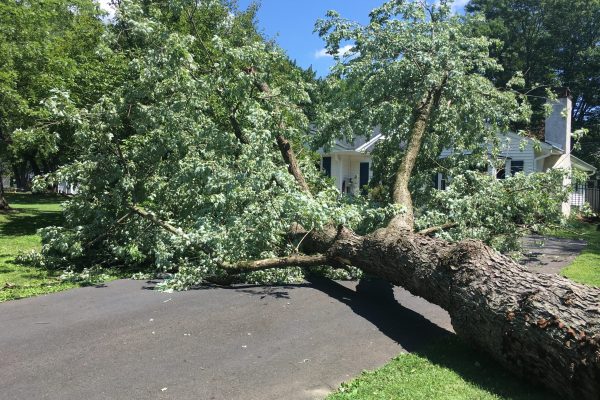
A decaying tree can collapse unexpectedly, especially during storms or high winds.
2. Leaning or Unstable Trunk
A tree that suddenly begins to lean to one side is a red flag. While some trees grow at an angle naturally, a shift in posture — especially after storms or flooding — usually indicates root damage or soil instability.
Signs to watch:
- New or worsening lean
- Exposed roots or cracked soil at the base
- Tree swaying more than usual in light wind
- Why it’s dangerous:
A leaning tree is at risk of falling — potentially onto your home, power lines, or people nearby.
3. Dead or Hanging Branches
Dead, dry, or cracked branches are not only signs of a declining tree — they are a fall hazard. These limbs can break off without warning and injure people or damage property.
Warning signs:
- Large limbs without leaves during growing season
- Hanging or broken branches stuck in the canopy
- Branches falling frequently during light wind
- Why it’s dangerous:
Even small branches falling from height can cause injury. Larger limbs can damage cars, roofs, or block driveways.
Spring Tree Trimming: Time to Recover and Rejuvenate
Best for:
- Removing winter damage
- Light shaping
- Encouraging healthy new growth
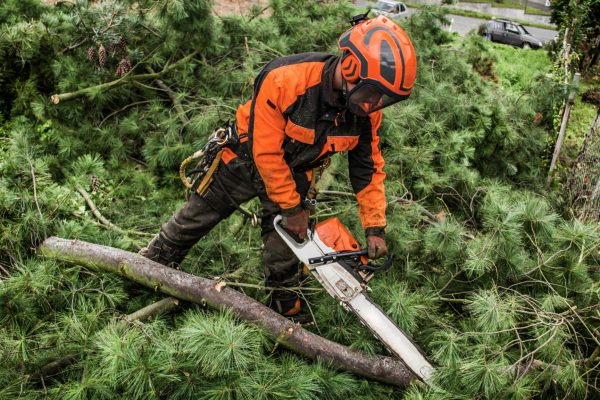
After the cold months, spring is ideal for inspecting your trees for dead, broken, or storm-damaged branches. Pruning these early helps trees focus energy on new growth.
What to trim:
- Dead or weak limbs
- Branches that cross or rub together
- Suckers or water sprouts
Caution: Avoid heavy pruning during early spring if trees are still budding.
Summer Tree Trimming:
Maintain and Manage Growth
Best for:
- Controlling overgrowth
- Improving airflow and light penetration
- Managing safety hazards
Summer is great for corrective pruning, especially on fast-growing trees. It's also when issues like pest infestations or fungal infections become visible.
What to trim:
- Low-hanging limbs over driveways or roofs
- Limbs growing too close to power lines or windows
- Diseased or pest-infested branches
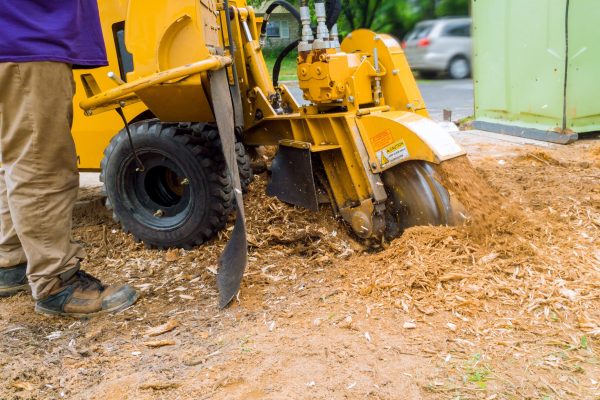
What Is Stump Grinding?
Stump grinding is the process of mechanically grinding down a tree stump using a specialized machine. The stump is reduced to wood chips several inches below the soil level, allowing you to cover the area with soil, sod, mulch, or landscaping.
✅ Pros of Stump Grinding:
- Fast and efficient – Most stumps are ground in under an hour
- Less invasive – Minimal disruption to surrounding soil and roots
- Cost-effective – More affordable than full removal
- Environmentally friendly – Chips can be used as mulch
❌ Cons of Stump Grinding:
- Roots remain – Large roots stay underground and decompose slowly
- Not ideal for replanting – Future planting in the exact spot may be difficult
- Possible regrowth – Some species may attempt to sprout again
What Is Stump Removal?
Stump removal involves completely extracting the stump along with the major root system. This is a more aggressive and labor-intensive process that usually requires heavy equipment and more time.
✅ Pros of Stump Removal:
- Complete root system eliminated – No chance of regrowth
- Replant-ready – Perfect if you plan to replant a tree or install a structure
- Prevents pests and disease – Nothing left behind to attract bugs or fungi
❌ Cons of Stump Removal:
- More expensive – Due to equipment and labor
- Disruptive – Can leave a large hole in your yard
- Time-consuming – Especially with large, deep-rooted stumps